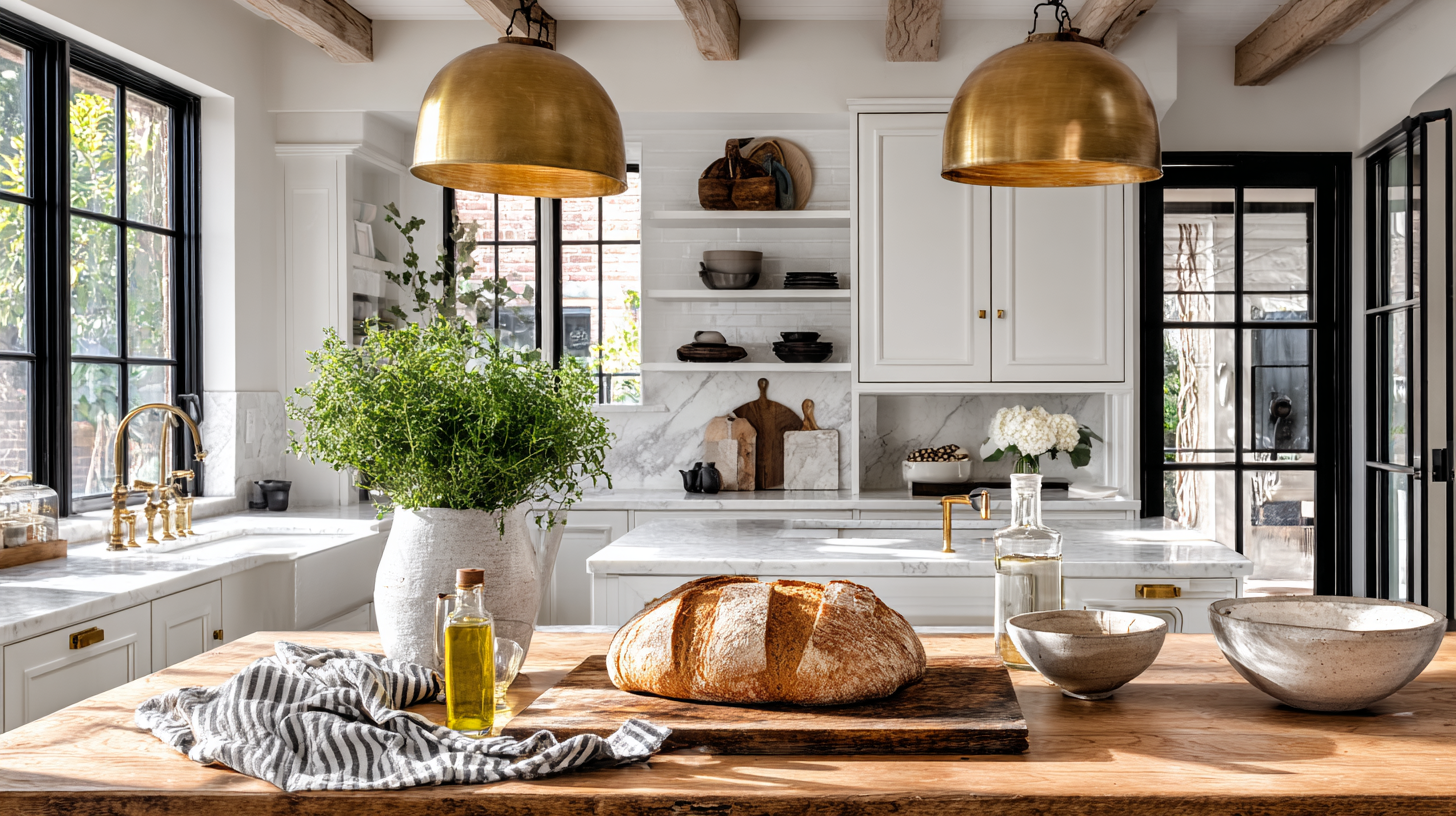
Before the food. Before the flowers. Before the china is lifted from the cabinet and carried to the table with both hands — there is a smell. It travels. It moves through rooms, down hallways, out windows, into the street. It announces something. It says: Someone in this house loves you enough to cook.
My mother called it Powerful Cooking. And that is exactly what it was.
Not just a meal. A presence. A declaration. The kind of cooking that doesn't need a sign on the door because the whole neighborhood already knows something beautiful is happening inside.
In our house, dinner was at 4:30. Not 4:45. Not "sometime around five." Four-thirty. The table was set. The food was ready. My father's bath was drawn. And when he walked through that door — from work, from the weight of the day — he walked into a home that had been preparing for him.
We were ten children. And not one of us had to be told what it meant. We understood it in our bones: the people you love deserve to be received. Not accommodated. Received. There is a difference, and the table is where you feel it.
"The people you love deserve to be received. Not accommodated. Received."
That 4:30 ritual was not convenience. It was a standard. It was our family saying, every single evening without exception: You matter enough for this to be ready when you arrive.
A Good Meal Begins the Day Before
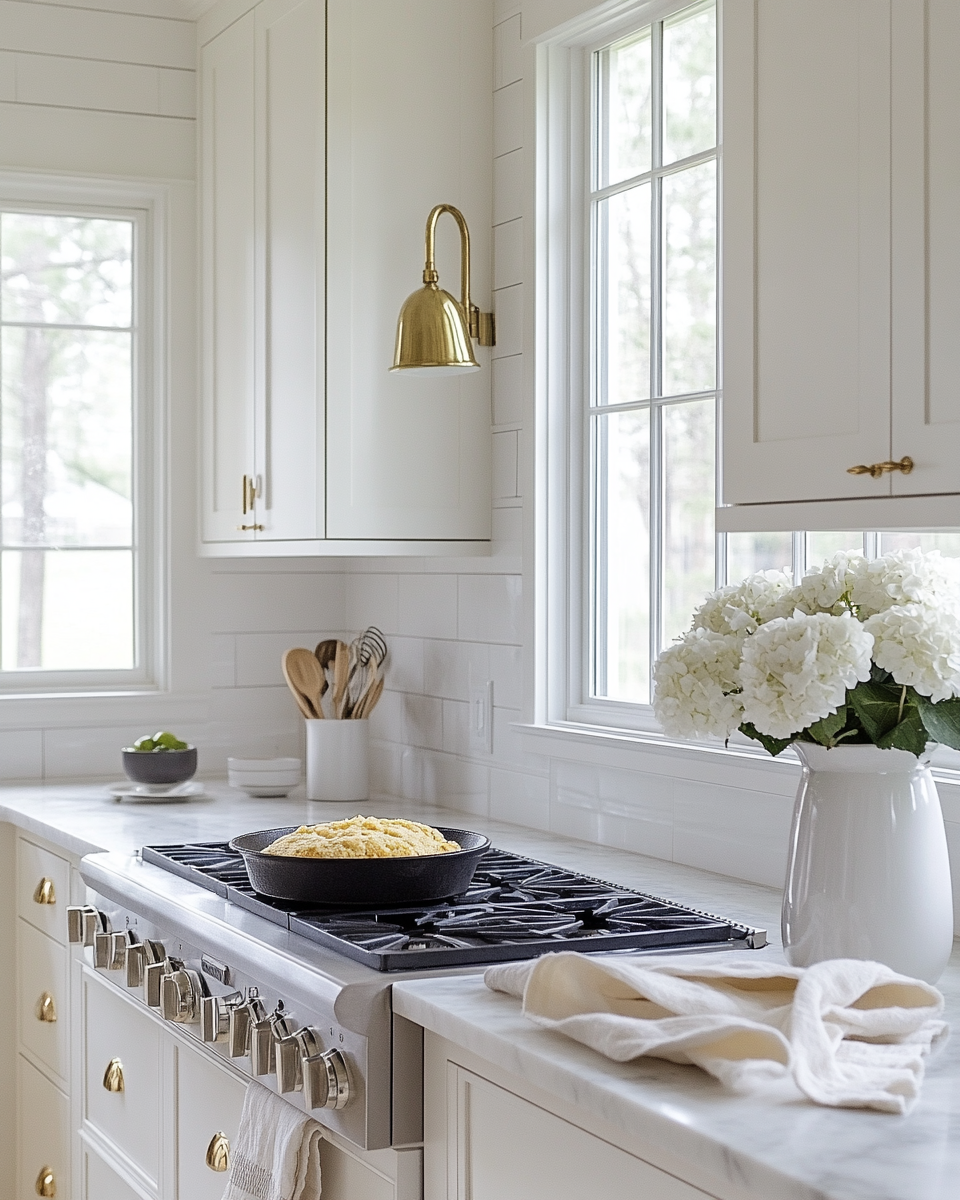
The cornbread. Every day. Made from scratch.
What the table holds on Sunday starts on Saturday. What arrives on the dinner table at 4:30 begins in the afternoon quiet of the kitchen — beans spread across the counter to be cleaned, collard greens washed leaf by leaf, potatoes and sweet potatoes peeled with intention, meat seasoned and laid to rest overnight so it could become what it was meant to be.
This is the part nobody photographs. Nobody frames this for the wall. But this is where hospitality actually lives — in the preparation that happens before anyone arrives, before anyone sees, before anyone says this is delicious. The care that goes into what no one witnesses is the foundation of everything they experience.
My mother knew this. She prepared like someone was always coming. Because someone always was.
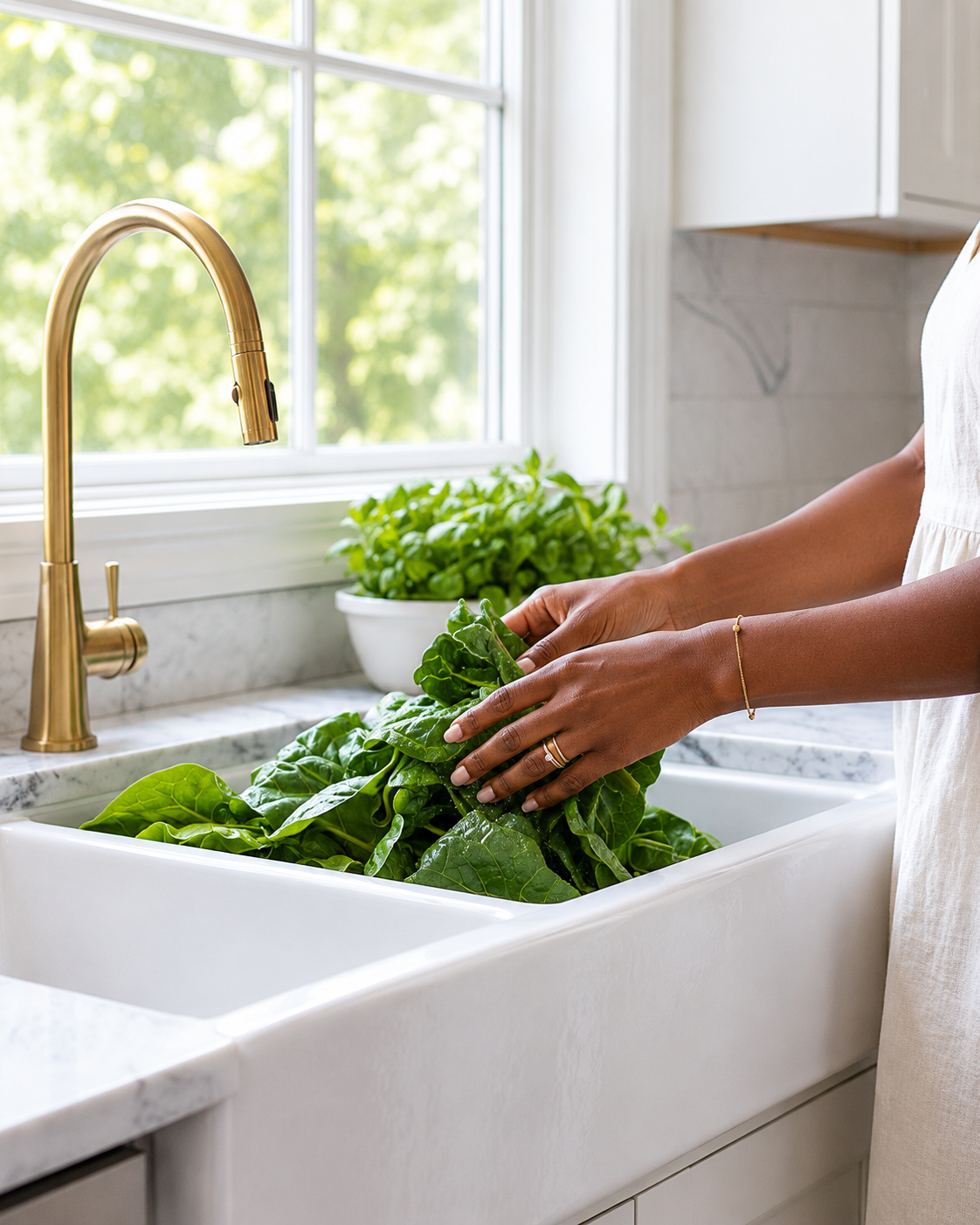
The work before the meal. This is where hospitality lives.
She Handed Me the Bread
When it was time — when we were old enough and steady enough to be trusted — my mother gave us assignments. She would oversee. We would cook. And the first thing she put in my hands was the cornbread.
Every day. Homemade. Not from a box. Not from a mix. Cornbread the way a woman makes it when she understands that bread is not a side dish — bread is a gesture. It says: I made this for you. I made this from scratch. I made this because you are worth the effort of doing it properly.
She didn't have to explain that to me. The cornbread explained it. Standing in that kitchen, measuring and mixing, watching her watch me — I was learning something that had nothing to do with recipes. I was learning what it means to carry a standard forward.
"Bread is a gesture. It says: I made this for you. I made this because you are worth the effort of doing it properly."
Every Chair Was for Someone
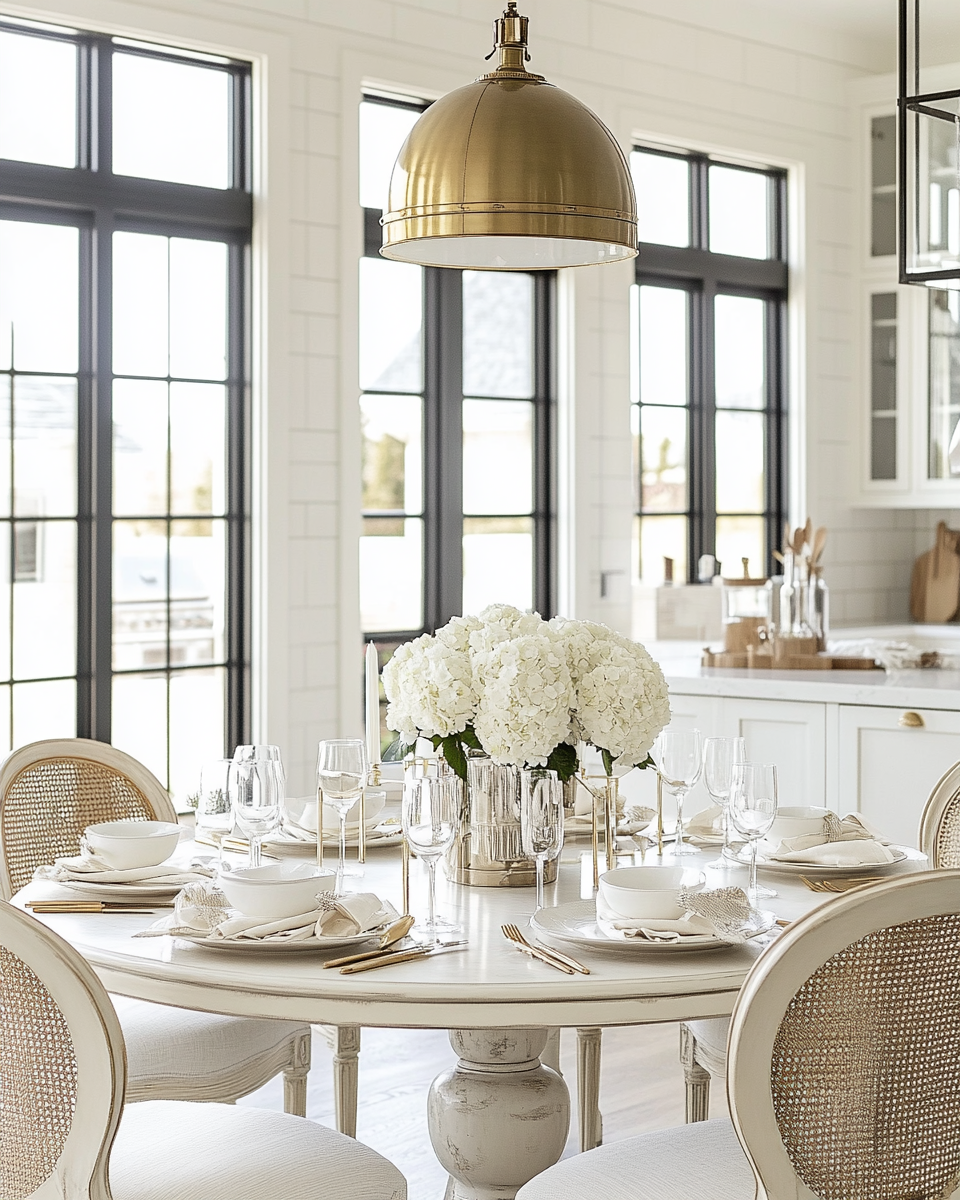
The Sunday table. Every chair was for someone.
On Sundays, we had guests. This was not occasional. This was not special. This was simply what Sunday was for.
Black neighbors. White neighbors. All of them seated at the same table, served the same meal, treated with the same grace. My parents — a pastor and a Marine — did not make a speech about it. They did not explain their position or defend their choices. They set an extra place. They filled another plate. And they passed the cornbread.
In that era, in that city, that Sunday table was a radical act dressed in ordinary clothing. It was conviction expressed through hospitality. It was my parents saying with their table what some people spent entire lifetimes trying to say with their words — and never quite managing it.
I grew up understanding that a table is not neutral. It makes a statement. Every time you set it, you are deciding who belongs and what they are worth. My parents decided: everyone belongs. And everyone is worth the good china.
We Never Used Paper Plates
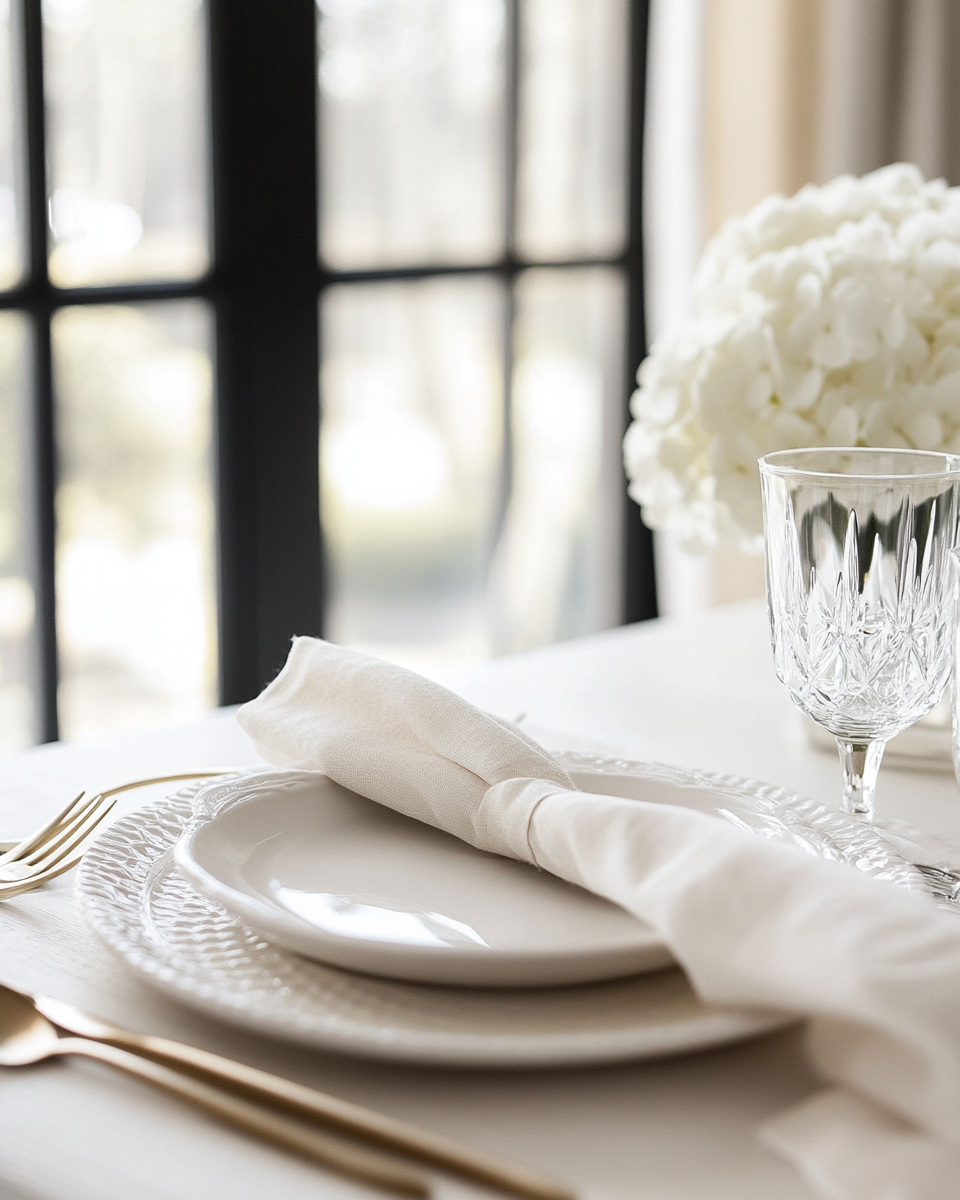
China. Linen. Crystal. This is the standard.
I will say this plainly, the way my upbringing taught me to say things that matter:
We did not use paper plates. Not for everyday. Not for guests. Not for convenience. Not once.
And to this day — I do not serve on paper plates.
This is not about expense. It is not about formality for formality's sake. It is about what you communicate when you hand someone a plate. A real plate says: you are staying. You are welcome here. This meal is worth something, and so are you. A paper plate says the opposite, even when you don't mean it to.
A Note on Standards
Use the china. Not just for company. Not just for the holidays. For Tuesday. For yourself. For the ordinary evening that deserves to feel like something. The china does not know the difference between a dinner party and a quiet night alone — but you will.
Set the table for yourself the way you would set it for the woman you most admire. Because you are her. And the table you set in private becomes the standard you carry in public.
Send Them Home With Something
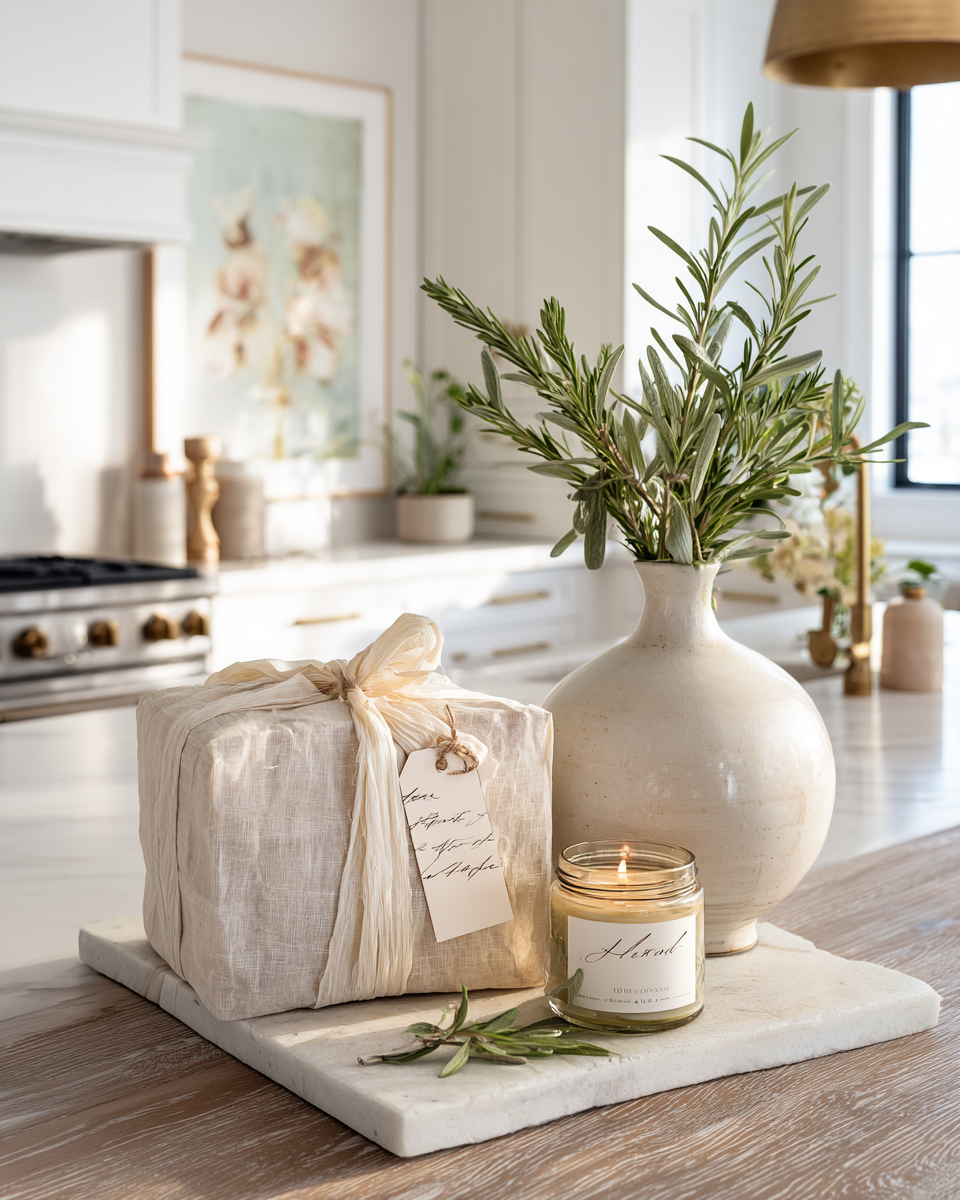
The final gesture. The meal does not end when the plates are cleared.
There is one more thing my upbringing taught me about hospitality that most entertaining guides leave out entirely: the meal does not end when the plates are cleared.
Your guest should leave with something in her hands.
A small token. A gesture that says: the time you spent here mattered to me, and I want you to carry something of it home. This is not a gift bag. This is not a favor. It is the final sentence of the welcome you began when you set the table.
Some beautiful ideas for what that something can be:
- A small jar of homemade jam, honey, or herb salt tied with a ribbon
- A single stem or small bundle of fresh flowers from your table arrangement
- A tin of good tea or a bag of specialty coffee
- A handwritten card with a recipe from something you served that evening
- A small candle in a scent that reminds you of the season
- A bar of artisan soap or a travel-size luxury lotion
- A packet of seeds if she loves to garden
- A bookmark with a quote chosen just for her
- A small print or art card if you collect beautiful things
- Leftovers wrapped beautifully — yes, this counts, and she will love you for it
The cost is not the point. The intention is the point. The fact that you thought of her before she arrived, while she was there, and as she was leaving — that is what she will remember. That is what becomes a story she tells.
Elaine. Morgan. Zora.
Elaine — you already know all of this. You learned it the same way I did, standing in a kitchen that smelled of something powerful. The question for you is not whether you know how to set a table. The question is whether you are still doing it. Not just for the grandchildren at Christmas. For yourself. This Sunday. With the good china and a candle and music that makes the kitchen feel like a ceremony.
Morgan — you have been waiting for the right occasion to use what you've been collecting. The occasion is tonight. Invite someone you've been meaning to have over for months. Set the table properly. Cook something that takes all day. Send her home with a little something. Watch what happens to the friendship.
Zora — you don't need a dining room. You don't need matching china. You need a table, real plates, and someone you love. Start there. Make the cornbread from scratch. It doesn't have to be perfect. It has to be made with care. That's the whole lesson. That's all of it.
"Who taught you to set a table? And are you still doing it?"
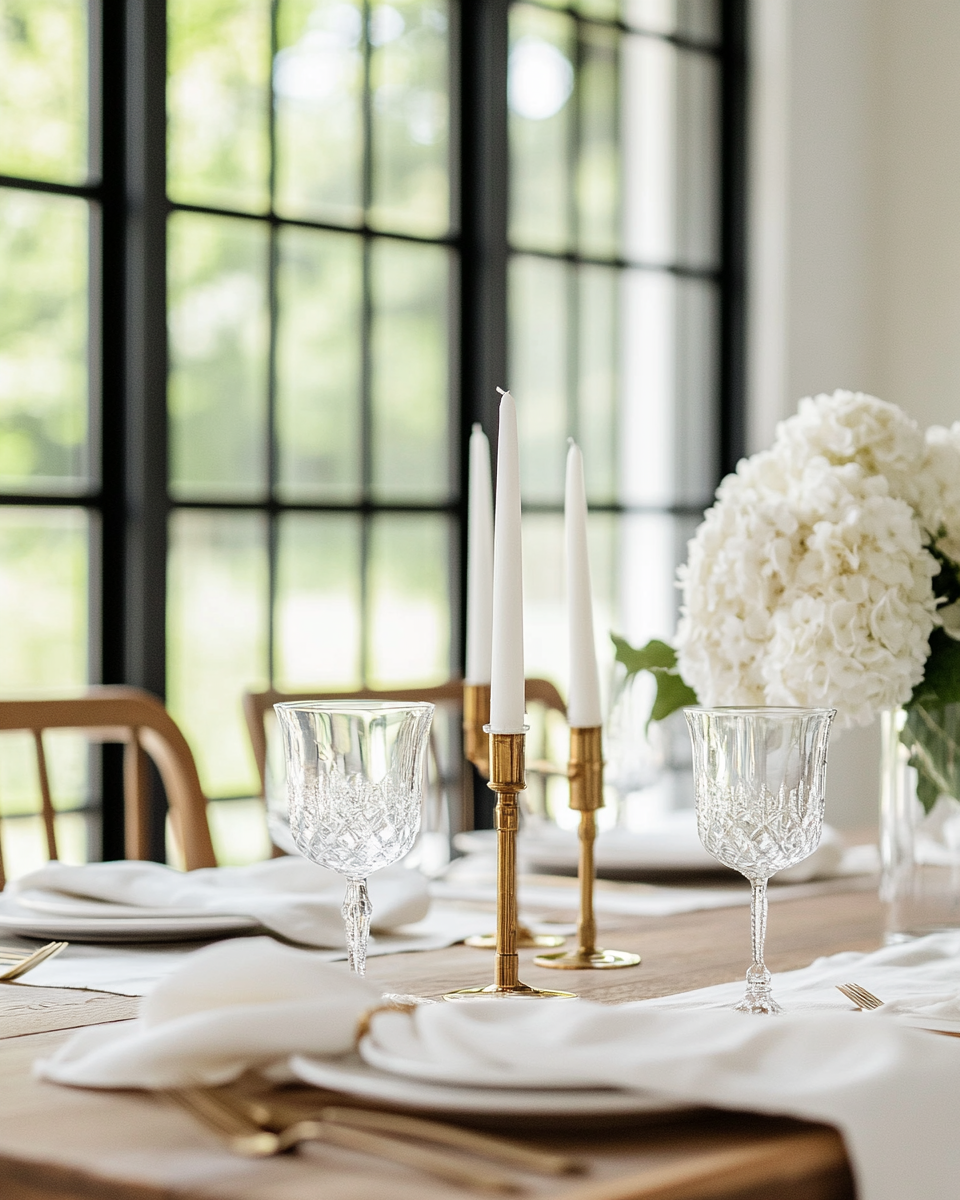
The Afterglow. Love, hospitality, and conversation still linger.
Somewhere, there is a kitchen that smelled like Sunday. Somewhere, there is a woman who made cornbread every day without being asked, without being thanked, without stopping — because she understood that Powerful Cooking is not about food.
It is about love made visible. It is about a standard kept. It is about a table that says, every single time: you are expected here. You are welcome here. And you are worth every bit of this.
Set the table like someone is coming.
Because someone always is.